

News Archive


CONFERENCE – HEALTH PROMOTION, EQUITY AND RIGHTS: THE OTTAWA CHARTER AT 40
Registration is now open for our upcoming annual conference, happening October 20 & 21. Early bird rates in effect until July 15! Click for more information.
More >

HOUSTON, HABIBI: EBOLA QUARANTINE HINDERS RESPONSE AMID FASTEST-GROWING OUTBREAK, AID WORKERS SAY
Canadian humanitarian aid workers say their ability to respond to the Ebola outbreak in the Democratic Republic of Congo has been stifled by the country’s long quarantine period, forcing some to stay home or cut their deployments short. They say an extension of the mandatory 21-day quarantine for Canadians and permanent residents returning from the DRC, Uganda or South Sudan could be detrimental to the outbreak response. The World Health Organization has said this is the fastest-growing Ebola outbreak in history, on track to be the deadliest, with Africa’s top public health agency reporting more than 2,500 deaths out of more than 5,000 infections. CHLPE's Adam Houston and Roojin Habibi contribute.
See also As Congo’s Ebola outbreak worsens, Ottawa faces criticism for stepping back (Adam Houston contributing). Globe & Mail >

JAMAICA AND INTERNATIONAL EXPERTS JOIN FORCES TO ADVANCE HEALTH SECURITY
CHLPE's Roojin Habibi was part of a Pan American Health Organization (PAHO) mission to Haiti this September. Jamaica faces a range of endemic and cross-border public health threats, with high levels of international travel adding to the complexity of protecting its population. To support Jamaica’s continued efforts to strengthen preparedness, an international team of experts undertook a Voluntary External Evaluation (VEE) under the International Health Regulations (IHR). The evaluation provides an independent and collaborative review of the country’s capacities to prevent, detect, and respond to public health threats. Its recommendations will help identify priority areas for investment and improvement while strengthening coordination across Jamaican government and supporting Jamaica’s efforts to build a more resilient and prepared health system.
More >
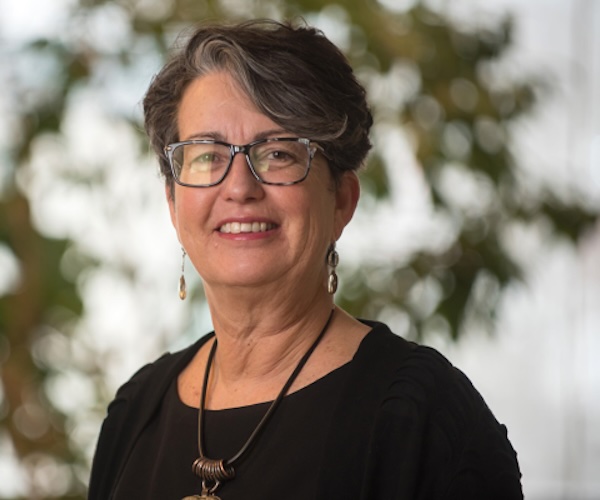
MICHELE LEERING JOINS THE FACULTY OF LAW
The Faculty of Law is excited to welcome postdoctoral researcher Michele Leering, who will undertake a two-year program focused on evolving legal education to address complex societal challenges. With CHLPE in particular Michele will work on "health justice partnerships", collaborations between healthcare providers and legal providers to address health problems where legal issues are a factor—for example, unsafe housing, access to benefits, immigration status, domestic violence, and more. She will also collaborate with CHLPE on developing experiential learning opportunities for our law students. Previously Michele was a visiting scholar at Queen’s University Faculty of Law after graduating with a Ph.D. from there in 2023. She served for almost four decades as a lawyer and the Executive Director of the Community Advocacy & Legal Centre, a non-profit community legal clinic in Belleville. Over her career she has been involved with the Canadian Bar Association’s Access to Justice Committee, the International Legal Aid Group, the Open Society Justice Initiative, Ukraine’s International Renaissance Foundation, and Namati. In 2022 she was inducted as a Member of the Order of Canada for her work on access to justice.

AUDREY FERRON PARAYRE BEGINNING A NEW CHAPTER AT UNIVERSITÉ DE MONTRÉAL
CHLPE's Audrey Ferron Parayre is beginning a new chapter as Associate Professor of Law at the Université de Montréal. Audrey began her career in the Civil Law section at the University of Ottawa and has been a member of CHLPE since its inception. During her time with us Audrey has advanced the field of law and policy dealing with obstetric-gynecological violence (OGV)—acts, words, or omissions occurring during obstetric or gynecological care that are perceived by patients as disrespectful, discriminatory, or are associated with mistreatment. Audrey completed her doctorate in Law at UdeM, focussing on the legal framework governing consent in healthcare in Quebec. She showed that it penalizes only a tiny proportion of undisclosed risks and incentivizes physicians to minimize their own legal risk rather than provide their patients with complete information. During this work she noticed that a significant proportion of legal disputes arose in the particular context of childbirth. There case law and empirical research showed that physicians calibrate their approach based on legal risk associated with the baby’s condition rather than the mother’s consent. Audrey's ongoing focus on OGV stemmed from that point...
More >

COLLEEN FLOOD RECEIVES HONORARY DOCTORATE FROM UNIVERSITÉ SHERBROOKE
Professor Colleen Flood, inaugural Director of CHLPE and presently Dean of Law at Queen's University, has received an honorary doctorate in Law from Université Sherbrooke. Colleen has built a reputation for drawing attention to law’s role in the broad relationships within health systems. Her research has informed national and global debates over public healthcare versus privatization, healthcare system design, accountability, and governance, as well as the role of courts and the law in health rights. More recently her research has also focused on artificial intelligence in healthcare, particularly the role of law in regulating AI-enabled medical devices and other technologies. Our congratulations to Colleen!
More >

RAYWAT DEONANDAN WINS THE 2025 GUYANA PRIZE IN LITERATURE
CHLPE's Raywat Deonandan has won the 2025 Guyana Prize in Literature for his recently released book, A Memory of Flowers and Coconut: A Collection of Short Stories. Said the jurors: “This is a technically accomplished collection of twelve short stories, set both ‘at home’ and in the diasporas, that explore various aspects of Indo-Guyanese cultures, histories and heritage. The stylish, measured prose is wry, sardonic and thoughtful; at his best Deonandan demonstrates a mature understanding of what short fiction can do."

FAFARD: IN COVID'S WAKE: HOW OUR POLITICS FAILED US – BOOK REVIEW
Political polarization poses a significant challenge for governments in several countries, most notably in the United States, by hampering public deliberation in critically important policy areas (Strickler 2018). Over the last decade, substantial research has been conducted on the origins and extent of this polarization, as well as on how to mitigate it or, at the very least, better manage it in the short term. This serves as a foundation for Stephen Macedo and Frances Lee's book. They provide a detailed review of the government response in the United States during the initial phase of the COVID-19 pandemic. This leads them to contend that, in conditions of polarization, policy making requires what they describe as “epistemic humility” on the part of government experts, along with effective legislative structures that promote genuine deliberation...
By Patrick Fafard in the Journal of Health Politics, Policy and Law
More >

JENNIFER CHANDLER EXPLORES THE HUMAN RIGHTS CHALLENGES OF NEUROTECHNOLOGY
Technology that can decode speech directly from brain activity is no longer science fiction. As such technologies advance, they promise to transform the lives of people with severe communication impairments—for example, as caused by ALS, cerebral palsy, or aphasia. But they also raise profound questions about privacy, autonomy, freedom of thought, and equality—including challenges surrounding the collection, interpretation, governance, and protection of neural data. CHLPE's Jennifer Chandler has been awarded a SSHRC Insight Grant to explore this fascinating new frontier with the goal of shaping the future governance and even development of emerging neurotechnologies. The research will examine how brain activity relates to thought and communication, and how fundamental rights are implicated in the process of decoding neural signals. The project will also explore emerging international debates surrounding “neurorights” and the regulation of neurotechnology. It brings together an interdisciplinary team spanning law, neuroscience, philosophy, disability studies, health sciences, and more.
More >

SWEANOR: PROHIBITION—WHAT LIES BENEATH?
CHLPE's David Sweanor on the Tobacco Harm Reduction Unfiltered podcast. What drives tobacco control policy—science or ideology? In this episode of, Harry Shapiro spoke with Sweanor about prohibition, tobacco harm reduction, vaping, nicotine policy, and the future of public health. They explored why evidence-based regulation matters, the role of innovation in reducing smoking, and whether prohibition can ever achieve its intended goals. Watch for an in-depth discussion on tobacco control, smoke-free alternatives, public health policy, and harm reduction from the Global Forum on Nicotine 2026.
More >
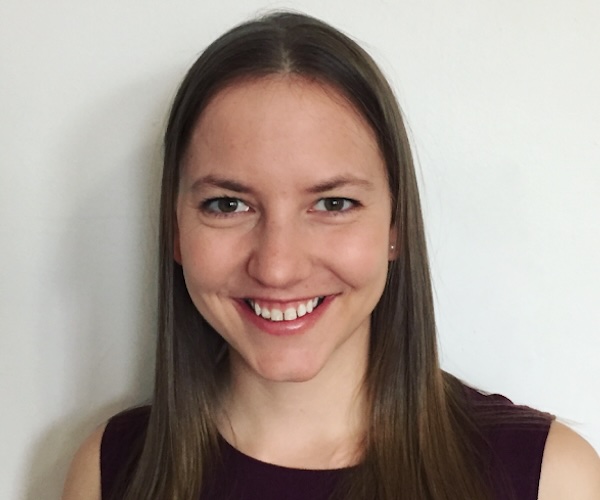
CZARNOWSKI: UNDERSTANDING CANADIAN SURROGACY CONSULTANTS’ PERSPECTIVES ON THEIR ROLE AND THE LAW
A big congratulations to Alicia Czarnowski who defended per Ph.D. in Law thesis under the supervision of CHLPE's Vanessa Gruben. Her dissertation analyses the empirical data arising out of eight semi-structured interviews with Canadian surrogacy consultants. It provides insight into surrogacy consultants’ perspectives and practices, and explores how consultants’ first-hand accounts align with the existing narratives about surrogacy consultancies. Ultimately, participants’ voices provide nuance to ongoing debates and discussions. Many first-hand accounts challenge some prevalent criticisms, revealing a strong desire to help surrogates in particular, as well as practices that can provide valuable support. However, other accounts indicate practices and that may be harmful for surrogates and intended parents, suggesting a need for increased oversight. In addition, the dissertation highlights how consultants understand and implement the law. Participants shared multiple justifications for their businesses’ legality based on their understandings of the law. Their discussions suggest that Canada’s prohibition of paid surrogacy intermediaries is generally ineffective in that the current legal regime fails to deter undesirable activities while simultaneously limiting access to potentially beneficial services. These findings cumulatively support calls for the regulation of surrogacy consultancies.
More >

WELCOMING BENJAMIN MASON MEIER, FULBRIGHT VISITING SCHOLAR
The University of Ottawa Centre for Health Law, Policy and Ethics is excited to welcome Benjamin Mason Meier, JD, LLM, PhD as our 2026–27 Fulbright Visiting Research Chair in Health Law, Policy and Ethics. Based at the University of North Carolina at Chapel Hill, USA, Professor Meier has over two decades of experience in collaborative research, interdisciplinary teaching, and policy analysis at the intersection of international law and global health. He is a consultant to international organizations, national governments, and nongovernmental organizations, and serves as the Founding Chair of the Human Rights Forum of the American Public Health Association and the Inaugural Chair of the Global Health Law Consortium. His engaged scholarship has led to three foundational Oxford University Press volumes, a quarterly column on Global Health Law in the Journal of Law, Medicine & Ethics, and over 150 interdisciplinary research articles.
More >
PHD IN LAW OPPORTUNITY WITH PROFESSOR JENNIFER CHANDLER
We are looking for a strong, curious and highly motivated law graduate to join our team to pursue their Ph.D. in Law within the NeuroSpeech project. Professor Chandler is leading this multi-year, interdisciplinary investigation of the human rights implications of communication neuroprostheses. The research team includes experts in law, ethics, philosophy, neuroscience, neuroengineering, brain-computer interfaces, speech language pathology, neuroimaging, neurophysiology, neurolinguistics, STSS (science, technology and society studies), sociology, disability theory, clinical neuroscience and neurodegenerative conditions. Position open until filled.
More >

HOWELL, WORLEY & WILLIAMS: ASSESSING IDENTITY-RELATED STRESS & TRAUMA DURING PTSD TREATMENT
Trauma therapists may value culturally responsive care but lack training in how to assess experiences of discrimination. Understandably, they may not feel that competent to assess discrimination or worry that they are practising outside their scope. Understanding barriers to assessing identity-related stress and trauma in culturally responsive assessment can be a first step to incorporating culturally responsive assessment into clinical practice. Determining whether available evidence supports the worry thoughts or possible barriers we may experience related to culturally responsive assessment can build our motivation and readiness to try using culturally responsive assessment methods.
See also from Monnica Williams:
Intersecting harms: The psychological impact of police harassment
More >

HABIBI, CHEN & LIEW: SUSPENDING IMMIGRATION OVER EBOLA IS MISGUIDED AND GOES AGAINST INTERNATIONAL LAW
Published in response to Canada’s suspension of immigration for people from Ebola-affected countries, this op-ed examines how public health measures can conflict with international legal obligations. Canada's policy here is inconsistent with the International Health Regulations and reflects a broader pattern in which emergency measures risk becoming overbroad, discriminatory, and ineffective. International health law requires responses that are evidence-based, proportionate, and grounded in human rights. Blunt restrictions may not only undermine trust but weaken global disease surveillance rather than improve public health outcomes.
More >

WOLFSON & VAN KATWYK: BOOMERS AREN’T REALLY HOARDING WEALTH, BUT AN AGING POPULATION REQUIRES REFORMS
Canada’s aging population has become a lightning rod for generational anxiety. Commentators increasingly warn that baby boomers are “hoarding” wealth, while draining public coffers through pensions and health care and leaving younger generations to foot the bill. This framing is emotionally resonant – and deeply misleading. The average boomer does indeed hold a sizable share of household wealth while being a net recipient of public pensions and publicly funded health care. But this is not the result of an intergenerational raid on public resources; it is the outcome of decades of asset accumulation by households and sustained taxation to finance a robust welfare state.
See also from Michael Wolfson: Is the “OK Boomer” Meme Realistic for Major Public Transfers in Canada? Intergenerational Equity and Long-Run Public Policy in Canada (Canadian Public Policy 52(1))
Michael Wolfson will be speaking at the Multipli Health Workshop at the University of Ottawa on July 10.
More >

ZENONE ET AL: THE POLITICAL ECONOMY OF WELLNESS: COMMERCIAL DETERMINANTS OF A BURGEONING INDUSTRY
Wellness has grown into a multi-trillion-dollar industry that increasingly shapes public attitudes and policy through products, information, and advocacy. Drawing on commercial determinant of health frameworks, this article argues that the industry uses political strategies similar to harmful commodity industries, including resisting regulation and promoting individual responsibility. The US MAHA (Make America Healthy Again) movement demonstrates wellness’s growing influence on policymaking while neglecting structural causes of poor health. We call for stronger regulation of health claims, action against online misinformation, and greater investment in equitable health systems.
Read in the Milbank Quarterly >
See also from Marco Zenone :
More >

CHEN: MISINFORMATION IS DRIVING THE DEBATE OVER REFUGEE HEALTH CARE
In practice, access to care under the IFHP is often far more limited than critics suggest. Y.Y Chen writes in the Hill Times.
More >

UOTTAWA LAUNCHES HALO INITIATIVE TO SUPPORT CANADA’S AI HEALTHCARE STRATEGY
AI scholars from across the University of Ottawa partner to support the transformation of Canada’s health AI system by connecting academia, hospitals, government, and innovators and providing legal, policy and data asset guidance. CHLPE is excited to be part of this cutting edge initative.
More >

HABIBI, CHEN, LIEW: SUSPENDING IMMIGRATION OVER EBOLA IS MISGUIDED AND GOES AGAINST INTERNATIONAL LAW
Yesterday, the federal government suspended the processing of immigration applications and the validity of previously issued immigration documents for residents of Ebola-affected countries. For now, the measure affects Congolese, Ugandan and South Sudanese migrants to Canada. It is misguided, unsupported by scientific evidence, and crucially, inconsistent with Canada's obligations under international law. Roojin Habibi, Y.Y. Chen, and Jamie Liew write in the Globe & Mail
More >

J.D. STUDENT DANA LIN PUBLISHED IN UNIVERSITY OF WESTERN ONTARIO LAW JOURNAL
University of Ottawa J.D. student Dana Lin has published her term paper from her Introduction to Health Law course in the University of Western Ontario Law Journal, a rare achievement for a course paper. In Health Privacy for All: Identifying Privacy Risks in Canadian Frameworks for Trans Patients, Dana argues that Canadian privacy law fails to adequately address the unique needs of trans people, who face increased privacy risks in the healthcare system. Her paper considers the limitations of Canada’s health privacy laws, including the risks posed by broad disclosure exceptions, the overlap of public and private health care, and the increased use of health data sharing. Additionally, it examines comparative approaches from jurisdictions such as the U.S., Switzerland, and Iceland, and proposes a refinement of privacy legislation that narrows the scope of broad exceptions and implements additional safeguards.
More >
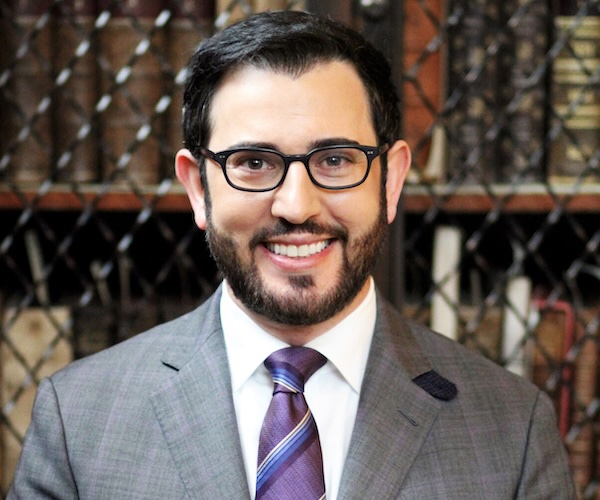
BENJAMIN MEIER TO JOIN CHLPE AS FULBRIGHT VISITING SCHOLAR FROM THE U.S.
We are so happy to learn that we will be welcoming Dr. Benjamin Meier as our Fulbright visiting scholar from the U.S. in September. Dr. Meier is a professor of global health policy in the Department of Public Policy and the Department of Health Policy and Management at the University of North Carolina at Chapel Hill. His research is at the intersection of global health, international law and public policy. It examines rights-based approaches to health, including the evolution and application of human rights in global health. As a contributor to the development of global health policy, Dr. Meier serves additionally as a senior scholar at Georgetown Law School’s O’Neill Institute for National and Global Health Law, as the past chair of the American Public Health Association’s Human Rights Forum, as the human rights chair of the Global Health Law Consortium, and as a consultant to international organizations, national governments and NGOs.
More >

OPEN MIND TALKS
CHLPE's Professor Jennifer Chandler and doctoral student Tristan Borresen have organized a new initiative called Open Mind Talks, aspiring to create an interdisciplinary community at the University of Ottawa across neuroscience, philosophy, linguistics, psychology, law, and informatics, where students and staff can discuss topics on brain science and society. On the last Friday of every month a speaker from one of the faculties will give an informal talk on their work and open for discussion. The first meeting, on April 24 at 3:00 pm, will feature neuroscientist Leonard Maler who will present new research conducted in collaboration with a Berlin team on acoustic communication in Danionella, a tiny tropical fish. Using whole-brain imaging, they found that social sounds like fighting and courtship activate ancient neural circuits tied to motivation and reward rather than higher order cognition. Humans share these same ancient circuits, linking to familiar questions about how rational our decisions really are when social repercussions are in play.

ASSOCIATE DIRECTOR DINA IDRISS-WHEELER SUCCESSFULLY DEFENDS PH.D.
CHLPE's Associate Director Dina Idriss-Wheeler is now Dr. Idriss-Wheeler! Congratulations to Dina on defending her Ph.D. dissertation, Exploring Intimate Partner Violence Health Inequities During COVID-19 Lockdowns in Ontario. Intimate partner violence (IPV) is a critical public health issue that affects millions globally. During the COVID-19 pandemic, public health mandates including lockdowns and social distancing requirements created conditions that amplified risks for IPV survivors while simultaneously disrupting access to formal and informal support systems. The aim of Dina's dissertation was to explore how lockdown measures in Ontario shaped experiences of IPV, access to supports, and perceived health outcomes. The research sought to determine whether, and in what ways, survivors of IPV faced disproportionate health inequities during the pandemic compared to the general population. Dina's work demonstrated that IPV survivors faced heightened health inequities during COVID-19 lockdowns, experiencing compounded barriers to support services and worse health outcomes than the general population. Findings revealed gaps in emergency preparedness frameworks, which currently fail to address gender-based violence as a core component of crisis response. There is an urgent need for sustained funding for the VAW sector, integration of IPV considerations into emergency and disaster management strategies, intersectional approaches to service design, and survivor-informed policies that prioritize equity and accessibility during crises.
Sign up for event notification and newsletter emails
Find us on...



