

News Archive


MIND-BRAIN-LAW READING GROUP RESTARTS
Mind-Brain-Law is a multi-disciplinary discussion group for people interested in the ethical, legal and social impact of the science and technology of the brain and mind. The group selects a recent interesting and important journal article to read and discuss, and uses it as a jumping-off point to explore broader implications. The group is open to students, scholars, and practitioners, both locally and nationally/internationally. The first meeting of 2020–21 will be on November 17. Spots are limited—RSVP is required.

RECONCILING CIVIL LIBERTIES AND PUBLIC HEALTH IN THE RESPONSE TO COVID-19
Today the Royal Society of Canada (RSC) released a policy briefing entitled Reconciling Civil Liberties and Public Health in the Response to COVID-19, co-authored by several CHLPE members. Click to download the report or its executive summary.
The RSC has broadly developed resources and reports to ensure open access to independent, evidence-based science regarding COVID-19: https://rsc-src.ca/en/covid-19.
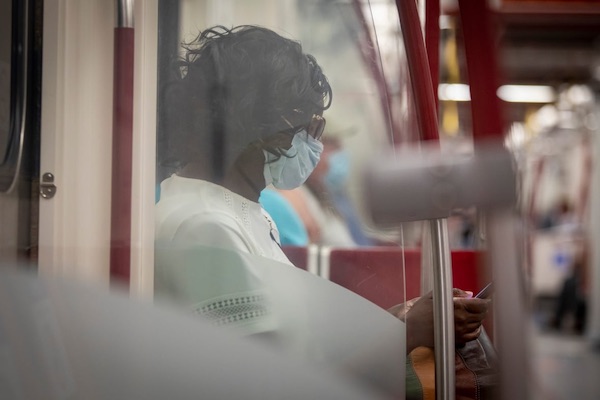
HOW CAN I SAFELY RETURN TO WORK DURING THE PANDEMIC?
Staying healthy as work resumes for many is going to require employees to not only strictly adhere to preventative measures — like hand hygiene and physical distancing — but to know their rights, say experts in infectious disease and occupational health and safety law. CBC interviews Prof. Katherine Lippel (Law) among others.
Full text >

COVID-19 SHINES AN UNFLATTERING LIGHT ON MANY OF CANADA'S VULNERABILITIES
As countries scramble to develop a vaccine to combat COVID-19, consider the possibility that although your taxes are funding a great deal of that research and testing, there’s no guarantee that you’ll be inoculated if and when a vaccine becomes available. Why? Because it’s possible that the patent will be owned by a pharmaceutical company that will decide who can get it and how much they’ll have to pay for it. The Ottawa Citizeninterviews Colleen Flood on the conception and delivery of the book Vulnerable: The Law, Policy and Ethics of COVID-19, where 40 contributors address this and many similar topics.
Full text >
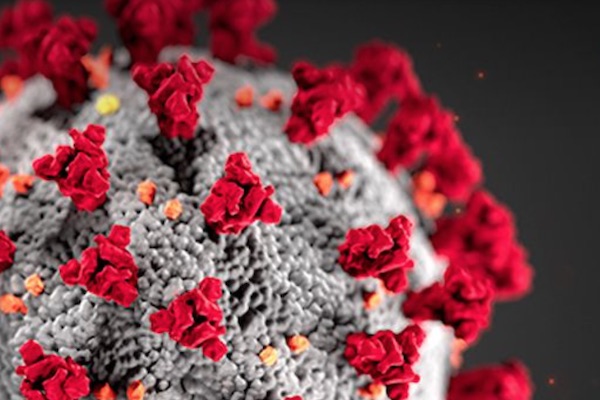
COVID-19 AND VACCINE NATIONALISM: AFRICA’S PATHWAY TO ACCESS
Professor Chidi Oguamanam (Law) addresses the lack of credible statistics on the extent of the COVID-19 infection in African countries and the absence of significant palliatives for ordinary citizens, businesses and corporations.
Full text >
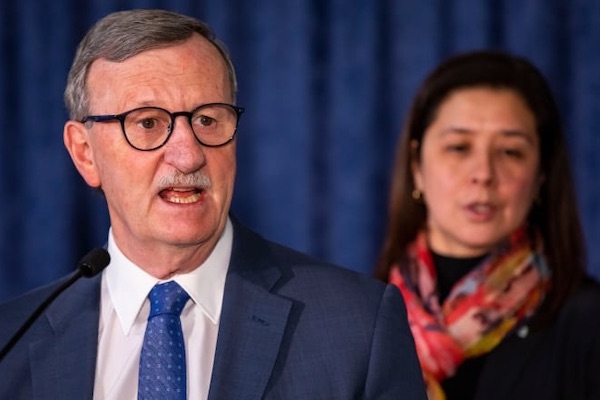
COMMUNICATION ABOUT COVID-19 FROM PROVINCIAL CHIEF MEDICAL OFFICERS OF HEALTH
Professor Patrick Fafard (Public Policy) is first author on a study of to what extent messaging by provincial chief medical officers of health varied across jurisdictions and over time in the early months of the pandemic.
Full text >
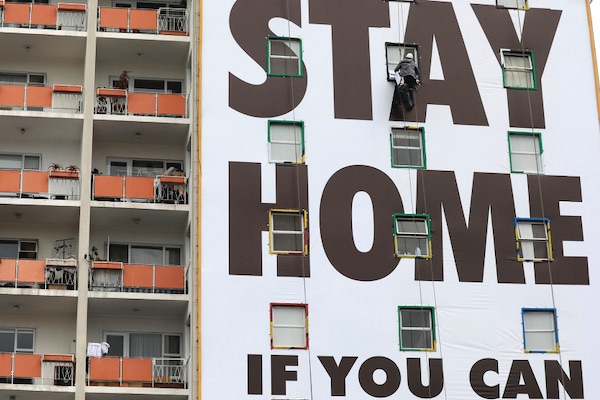
ADDRESSING VULNERABILITIES FOR A MORE EQUITABLE PANDEMIC RESPONSE
Vulnerabilities and interconnectedness at the centre of the COVID-19 pandemic are examined in this new series of articles in Policy Options. At issue are the vulnerabilities of people harmed by the virus directly as well as those harmed by our measures to slow the virus’s march; vulnerabilities in our institutions, governance and legal structures; and vulnerabilities in other countries and the global level.
Full text >


B.C. COURT DISMISSES CAMBIE SURGERIES CLAIM
The Supreme Court of British Columbia released its decision in Cambie Surgeries Corporation v. British Columbia (Attorney General). The plaintiffs claimed that provisions in the Medicare Protection Act violate rights under ss. 7 and 15 of the Charter, specifically the right to life, liberty, and security of the person and the right to equal protection and benefit of the law without discrimination. The court did not find an infringement of either section (finding that an infringement of security of the person was nonetheless in accordance with principles of fundamental justice). The case is expected to end in the Supreme Court of Canada.
Full text >
See also the recent book Is Two-Tier Health Care the Future?, a dive into the public-private health care debate in Canada.

MORE CANADIANS ARE REFUSING WORK DUE TO COVID-19—BUT IT'S TOUGH TO GET AUTHORITIES TO AGREE
Data on work refusals reported to provincial labour authorities shows there's been a spike in the number of people who have formally refused to work citing dangerous conditions. But virtually none of those work refusals are being upheld, which may illustrate just how unprepared existing labour laws are for dealing with COVID-19. Feat. Professor Katherine Lippel in CBC News.

COVID-19 AND CANADA’S MOBILE LABOUR FORCE
Since mid-March, Canadians have been told the best way to control the pandemic is for them to go home and stay home. Still, an immobilised population requires access to essential goods and services including health and home care, food, manufacturing (as for medical supplies), construction and maintenance, and transportation services for goods and people who are still mobile. Over the past eight years, the On the Move Partnership (OTM) has examined what we call the “mobile labour force”, the roughly 15% of the Canadian workforce who engage in complex/extended daily mobility like travel to other regions or provinces/territories, transportation and fisheries workers, and international labour migrants.

IMMUNITY CHECKS COULD HELP ENSURE FANS’ SAFETY AT SPORTING EVENTS
CHLPE Dr. Kumanan Wilson suggests that proof of coronavirus immunity can be a way to ensure the safety of those who attend certain arenas when sports finally emerge from their slumber. In the New York Post.
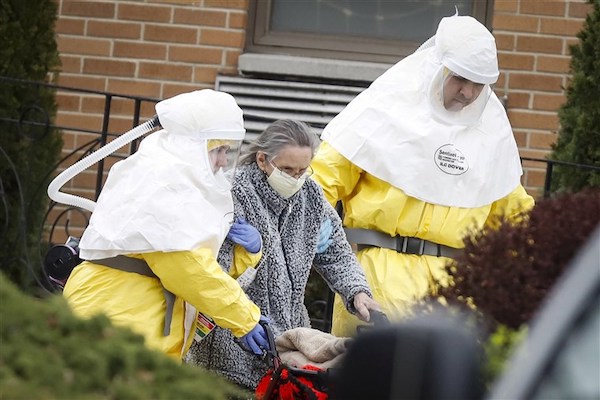
CANADA NEEDS TO START TAKING LONG-TERM CARE MORE SERIOUSLY
One of the reckonings Canada must face in the eventual aftermath of the COVID-19 pandemic is the failure of many long-term care facilities to protect their residents from the disease. How bad is it? To date, 81% of the people who have died from COVID-19 in Canada have been residents of nursing homes. In comparable countries, the toll has been much lower. The Globe and Mail editorial board write based on a report by the Royal Society of Canada.
Read also the original report by the RSC Task Force on COVID-19, of which CHLPE Director Colleen Flood is a member:

THERE’S A DRUG TO TREAT COVID-19, BUT CANADA MUST ACT SOON TO ENSURE ACCESS
There’s a drug treatment demonstrated to shorten a patient’s recovery time from COVID-19. But the U.S. just bought it all up. Why compulsory licensing is the right tool for right now—Adam Houston writes in the Tyee.
Read more by Adam Houston in healthydebate.ca:
New Tricks for Old Drugs? Canada Must Change How It Accesses Essential Medicines

OTTAWA MUST PUT DATA FIRST AND TIE TO HEALTH FUNDING
The federal government looks yet again about to transfer billions of dollars to the provinces with essentially no strings attached. One major quid pro quo could address Canada’s profound lack of high-quality data, especially highlighted by the COVID-19 pandemic. While U.S. analysts are able in near real time to estimate and project COVID cases, hospitalizations and deaths down to the county level, Canada is barely able to produce comparable data by province… Professor Michael Wolfson writes in the Toronto Star.

OUR POST-PANDEMIC FUTURE
In the weeks and months ahead, politicians, policy experts, academics, businesses, non-profit organizations and the broader public will have to make important choices as we rebuild our lives, societies and the international order. Vanessa MacDonnell, Sophie Thériault, and Sridhar Venkatapuram write in iPolitics.

IDENTIFY COVID-19 IMMUNITY TO EXEMPT CONTAINMENT?
Some nations are considering imposing an immunity passport to identify citizens who have recovered from COVID-19. Such a document would allow survivors to regain their freedom while those who have never been sick remain subject to the restrictions of social distancing. The theory is that a person who has been infected with the virus would no longer be at risk of infection and transmission since their immune system would have developed antibodies. CHLPE's Dr. Kumanan Wilson (Internal Medicine) is interviewed on Radio-Canada.

HOW SHOULD WE ENFORCE PANDEMIC RULES FOR THOSE LIVING WITH MENTAL ILLNESS?
A careful balance must be struck between public health rules during the pandemic and the civil liberties of Canadians living with mental illness. Professor Jennifer Chandler (Law) writes in Policy Options.
WE MUST ACT NOW TO PREVENT A SECOND WAVE OF LONG-TERM CARE DEATHS
The majority of COVID-19 deaths to date in Canada have been long-term care (LTC) home residents and workers. Canada has the highest reported national proportion of COVID-19 deaths for LTC residents in the world at 85% of COVID-19 fatalities. The majority are women. What have we learned from these events and how can we use this to prepare for a seemingly inevitable second wave? Carole Estabrooks, Colleen M. Flood and Sharon Strauss write.

HEALTH HUMAN RESOURCES IN LONG-TERM CARE AND MORE...
Professor Ivy Bourgeault (Management) researches human resources in the healthcare sector. Check out a few of her recent pieces in Policy Optionsrelating to this important dimension of the COVID-19 issue:
Long-term care work is essential but essentially under-recognized

AS THE RACE FOR A VACCINE RAMPS UP, SO DO CALLS FOR VACCINE INJURY COMPENSATION
Researchers are carrying out trials at an unprecedented pace in efforts to bring a successful vaccine to market in a matter of months instead of years. And although vaccine-related reactions are rare, experts say a fast vaccine—especially one developed using new technology—may come with unknown risks. Experts warn we have fallen short in developing a fund to compensate those who may be injured. CHLPE's Dr. Kumanan Wilson (Internal Medicine) contributes. In CTV News.

THE DEVELOPMENT OF A VACCINE STILL RAISES A LOT OF QUESTIONS
Where are we at with the development of a COVID-19 vaccine and how will it be distributed when it exists? Professor Patrick Fafard (Political Studies) contributes on Radio-Canada.
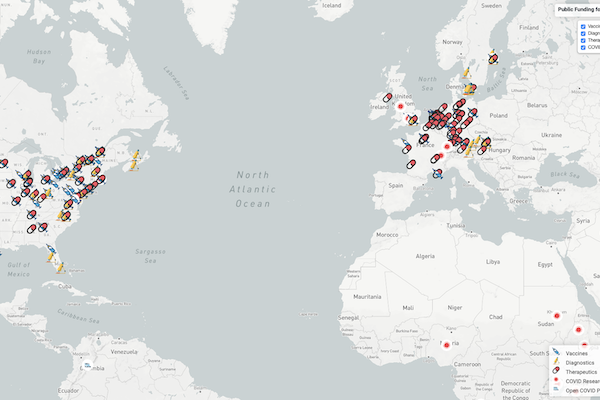
TRACKING PUBLIC INVESTMENT IN GLOBAL COVID-19 RESEARCH & DEVELOPMENT
Researchers around the world are racing to develop COVID-19 vaccines, diagnostics, and therapeutics. However, there are no guarantees about whether these will be affordable and accessible to all people. This tracking tool aims to map where public funding and taxpayer-supported R&D initiatives are taking place in order to better support policy making that will use every means necessary to ensure that vaccines and therapies are affordable to all. Maintained by the Universities Allied for Essential Medicines; the Student National Medical Association; and the American Medical Student Association.
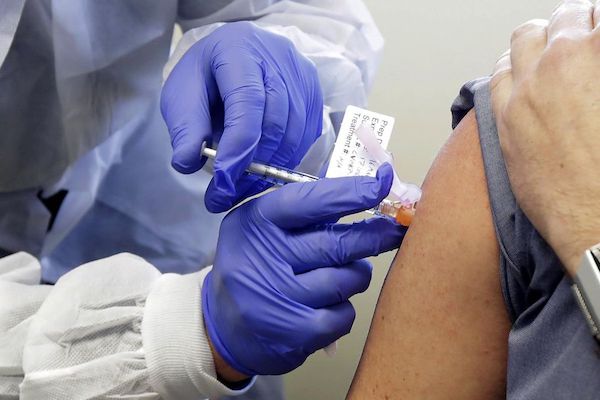
DOCTORS WITHOUT BORDERS WANTS TRUDEAU TO COMMIT TO FAIR ACCESS TO COVID-19 VACCINES
The government of Canada is full of good intentions but in the global race to find a COVID-19 vaccine, Doctors Without Borders says that’s not good enough. CHLPE's Dr. Jason Nickerson, a population health expert who’s worked in some of the world’s toughest hot spots, says the Canadian government needs to back up its words. In the Toronto Star.

NICOTINE COULD PREVENT THE SPREAD OF COVID-19, STUDIES SUGGEST
Researchers are investigating the effects of nicotine on COVID-19, the rapid spread of the novel coronavirus SARS-CoV-2 and evidence for a surprising hypothesis: Cigarette smokers are less likely than non-smokers to contract the virus... CHLPE Advisory Committee Chair David Sweanor contributes.
Sign up for event notification and newsletter emails
Find us on...



