

News Archive


THE COVID-19 PANDEMIC PRESENTS AN OPPORTUNITY TO DEVELOP MORE SUSTAINABLE HEALTH WORKFORCES
This commentary addresses the critically important role of health workers in their countries’ more immediate responses to COVID-19 outbreaks, and provides policy recommendations for more sustainable health workforces. Paradoxically, pandemic response plans in country after country often fail to explicitly address health workforce requirements and considerations...
Professor Ivy Bourgeault is first author on this new open-access publication in Human Resources for Health.

WHY SCHEDULING AND TRACKING ARE ESSENTIAL TO THE COVID VACCINE ROLLOUT
Dr. Kumanan Wilson appeared on the Hill Times Hot Room podcast to discuss how the technologies used to schedule and track the rollout are essential to ensuring that the largest healthcare intervention in human history runs smoothly.
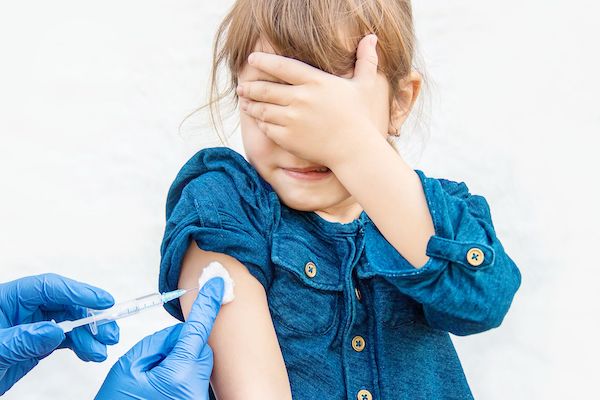
MANDATORY CHILDHOOD IMMUNIZATION PROGRAMS: A ROLE FOR RELIGIOUS AND CONSCIENCE BELIEF EXEMPTIONS?
Mariette Brennan along with CHLPE members Kumanan Wilson and Vanessa Gruben are authors of this new paper, available freely on SSRN. Childhood immunization programs are vital for public health. This paper analyzes the constitutionality of religious and conscience belief exemptions in vaccination programs in terms of both routine childhood immunizations and in the case of a COVID-19 vaccine. The paper proposes ways to restructure religious and conscience belief exemptions and provides guidance on how to move childhood immunization programs forward in the COVID-19 era.

TWO $15K LL.M. BURSARIES IN BIOMEDICAL LAW
Professor Jennifer Chandler is looking for two excellent researchers interested in doing their Masters in Law under her supervision at the University of Ottawa’s Faculty of Law. A research bursary of $15,000 is available for one student to participate in each of:
- Legal Definition of Death in an Age of Techno-Scientific Change
- Presumed Consent (Opt-Out) Systems for Organ Donation

CONFERENCE ON ORGAN DONATION & TRANSPLANTATION – REGISTRATION NOW OPEN
Registration is now open for Key Policy Issues in Organ Donation & Transplantation, an online conference coming June 17–18. Spanning nine panels over two days with speakers from medicine, law, policy, ethics, and patient partners. We hope to see you there!

ANNUAL REPORT 2019–20
CHLPE is excited to release our annual report for 2019–20! Find out what we've been up to in this black swan of a year.

MAJOR NEW PUBLICATION IN NEJM ON SPONTANEOUS RESUMPTION OF CARDIAC ACTIVITY
Bertram Loeb Research Chair and CHLPE member Jennifer Chandler was part of the international multi-disciplinary team conducting this study under the leadership of Dr. Sonny Dhanani, CHEO. Professor Chandler contributed ethical, legal and social scientific expertise to the project. This work is key to the practice of organ donation after cardiac death, where speculation about the possibility of auto-resuscitation (spontaneous resumption of heartbeat) has led to ethical and legal questions about how long to wait following cardiac arrest before removal of organs for transplantation. Professor Chandler is presently involved in a follow-on study examining neurological activity during the dying process.

THE STRANGE THING THAT IS THE REVIEW BOARD
Guillaume Ouellet and Emmanuelle Bernheim write in response to recent columns by Patrick Lagacé on the follow-up of persons found not criminally responsible by reason of mental disorder.

PETER LIU NAMED TO ORDER OF ONTARIO
CHLPE Advisory Committee member Dr. Peter Liu has been appointed to the 2020 Order of Ontario, the province’s highest honour. Dr. Liu is credited for having raised the international profile of Canadian cardiovascular research through his leadership at top national institutions. Congratulation Dr. Liu!

THE DANGERS OF PLAYING POLITICS WITH COVID-19 CURES
As treatments for COVID-19 are sought, there also needs to be a stronger stance against promoting unproven medicines. Faculty of Law Ph.D. Candidate Adam Houston writes in African Arguments.

WHEN ARE YOU ACTUALLY ALLOWED TO TRAVEL AND HOW WILL THE GOVERNMENT CHECK?
Everyone knows international trips during the COVID-19 pandemic are highly discouraged. But what are Canadians legally allowed—and not allowed—to do when it comes to travelling abroad? The answer is more complicated than you might think. CHLPE's Martha Jackman (Law) contributes (Global News).

WHAT DOES OUR FUTURE AFTER THE PANDEMIC LOOK LIKE?
In the weeks and months ahead, politicians, public policy experts, academics, businesses, non-profit organizations and the general public will have important choices to make in rebuilding our lives, our societies and the international order. Vanessa MacDonnell, Sophie Thériault, and Sridhar Venkatapuram write in La Presse.
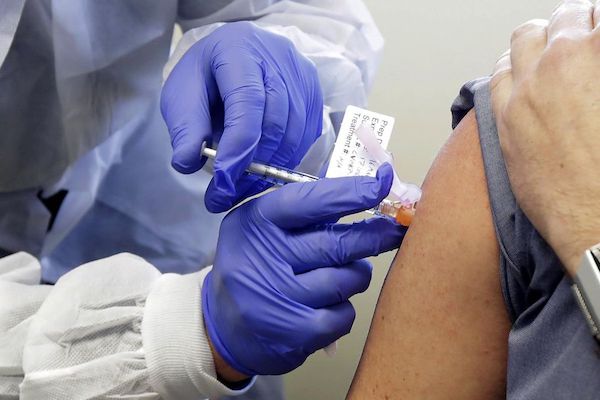
PLEASE SHOW YOUR VACCINE CERTIFICATE
Vaccination certificates will likely be required in a variety of settings. Policy makers must have clear rules for their design and implementation. Colleen M. Flood, Vivek Krishnamurthy, and Kumanan Wilson write in Policy Options.

MANDATORY VACCINATION FOR HEALTH CARE WORKERS: AN ANALYSIS OF LAW AND POLICY
Making vaccination of healthcare workers mandatory would guard against depletion of the healthcare workforce, and may reduce rates of workers transmitting COVID-19 to their patients. However, such policies have historically been challenged under labour law, and in theory might be challenged under human rights law and the Canadian Charter of Rights and Freedoms. Colleen M. Flood, Bryan Thomas, and Kumanan Wilson write in the Canadian Medical Association Journal.

CANADA NEEDS A NATIONAL DATABASE TO TRACK COVID-19 VACCINATION
With the first Canadians getting the COVID-19 vaccine this week, the importance of effectively monitoring the rollout of vaccinations is coming to the fore. The government response nicely recognizes the lead role of the provinces in setting priorities for vaccination. This cooperative federalism is wonderful—when it works. However, for anyone with experience in software, databases and statistical analysis, the vaccination monitoring described sounds like a dog’s breakfast. That’s not good enough when lives are on the line. CHLPE's Michael Wolfson (former Assistant Chief Statistician at Statistics Canada) writes in the Globe and Mail.
Also hear Dr. Wolfson in a radio interview:

THE LIFE-SAVING MEDICINE SHE NEEDS IS CHEAP, COMMON, AND UNAVAILABLE IN CANADA
While doctors removed a rare parasite growing on Cassidy Armstrong's liver before it killed her, she doesn't know if she'll receive the medication she'll need for the rest of her life. Her temporary supply of the drug is running out and she's still waiting for Health Canada to provide long-term access. CHLPE Ph.D. candidate Adam Houston is quoted in CBC News.
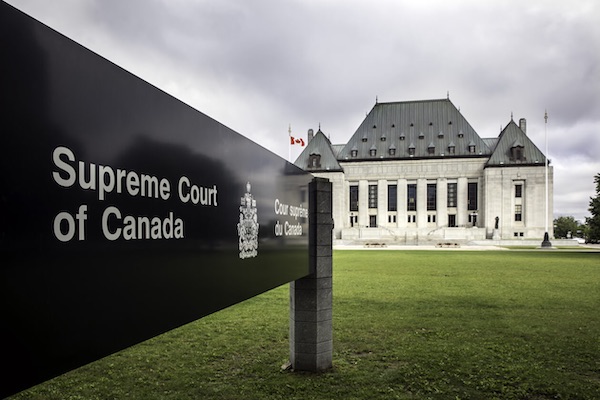
KAREN ELTIS CITED BY SUPREME COURT OF CANADA
Professor Karen Eltis’s work was cited in the November Supreme Court decision Quebec (Attorney General) v. 9147-0732 Québec inc. The court grappled with looking to foreign and international legal sources to aid in interpreting the Canadian Charter’s protection against cruel and unusual punishment. In doing so, it looked to Karen Eltis’s work on comparative constitutional law and the “living tree” approach to Charter interpretation.

WHAT CAN THE CHIEF MEDICAL OFFICER OF HEALTH FOR ALBERTA DO?
Professor Patrick Fafard (Public Policy) was interviewed by CBC Radio in Calgary about the role and powers of the Chief Medical Officer of Health for Alberta, and how her role compares to that of her counterparts in other countries. Does Dr. Deena Hinshaw have the power to lock the province down? Or is that Premier Kenney's call in the end?

ON THE WITNESS STAND: DISRUPTING BIG TOBACCO
David Sweanor, Chair of CHLPE's External Advisory Committee and the first lawyer globally to work full-time in public policy advocacy against big tobacco, recently testified before the Parliament of Australia's Select Committee on Tobacco Harm Reduction. The brief transcript makes for an interesting conversation about the disruptive effect of vaping technologies on big tobacco companies:

IS IT "HOARDING" OR GOOD PLANNING? CANADA LEADS WORLD IN PROCURING COVID-19 VACCINE
Canada has pre-ordered far more COVID-19 vaccine per capita, and from more potential suppliers, than any other country. And that includes the two manufacturers—Pifzer and Moderna—that recently reported promising results on the effectiveness of their products. But to international development organizations, Canada’s accomplishment is something else—a sign of how rich countries are “hoarding” coronavirus vaccine in a way that will deprive poorer nations for months or years. The moral question aside, they argue that that’s a self-defeating strategy given the risk that outbreaks will continue to occur in Canada until all countries have been sufficiently immunized. CHLPE's Jason Nickerson is cited in the National Post.
Jason Nickerson also recently appeared on TVO's The Agenda – "Tracking Canada’s Vaccine Race":
...and before the House of Commons Standing Committee on Foreign Affairs as part of their study on Vulnerabilities Created and Exacerbated by the COVID-19 Pandemic:

CANIMMUNIZE ON THE FRONT LINES OF VACCINE ROLLOUT
The COVID-19 vaccine rollout will be one of the largest and most complex health initiatives in Canadian history. The CANImmunize app, brainchild of CHLPE's Dr. Kumanan Wilson, is poised to help monitor the safety and effectiveness of the vaccines while also allowing Canadians to easily store their vaccination history on their phones. Read more here:

FIRST, DO LESS HARM CONFERENCE ON HARM REDUCTION VIDEOS
On November 12 and 13 the Ottawa Hub for Harm Reduction and CHLPE hosted First, Do Less Harm, a two-day online conference on the law, policy, and ethics of harm reduction in areas including opioids, cannabis, tobacco, and others. Speakers were drawn both from universities and medical and front line harm reduction organizations. A special thanks to Professor Vanessa Gruben (Law), Director of the Hub! Videos of all panels are currently available at www.ottawahealthlaw.ca/pastevents.


HYBRID MINDS: EXPERIENTIAL, ETHICAL AND LEGAL INVESTIGATION OF INTELLIGENT NEUROPROSTHESES
In November, CHLPE's Professor Jennifer Chandler (Law) and colleagues were awarded a major three-year grant from the European Research Area Networks (ERA-NET) for a multinational and multidisciplinary research project. The grant, worth CAD$1.26 million, is funded by Canadian, German and Swiss national funders, and will support research by a team representing neurosurgery, neuroengineering, rehabilitation engineering, philosophy, and patient policy and advocacy. The project will address intelligent neuroprostheses, which represent the next phase in the evolution of devices integrated with the brain.
More >

FIRST, DO LESS HARM: CONFERENCE NOVEMBER 12/13
We're in the final couple of weeks to register for First, Do Less Harm: Harm Reduction as a Principle of Health Policy and Law – a conference on November 12/13 co-organized by CHLPE and the Ottawa Hub for Harm Reduction. Half of all proceeds go to local harm reduction organizations. We hope to see you there (virtually)!
Sign up for event notification and newsletter emails
Find us on...



