

News Archive


POTENTIAL OF POLYGENIC RISK SCORES FOR IMPROVING POPULATION ESTIMATES OF WOMEN’S BREAST CANCER GENETIC RISKS
Breast cancer risk has conventionally been assessed using family history and rare high/moderate penetrance pathogenic variants (PVs). In addition to these PVs, it is now possible to use increasingly predictive polygenic risk scores (PRS) as well. PRS information would be the most important advance in enabling effective risk stratification for population-wide breast cancer screening. CHLPE's Michael Wolfson is first author in Genetics in Medicine...
Full text >

POSTOPERATIVE OUTCOMES FOR INDIGENOUS PEOPLES IN CANADA: A SYSTEMATIC REVIEW
Indigenous patients who have had surgery are nearly a third more likely to die after their procedures than other populations in Canada and face higher risks of complications, new research suggests. The Canadian Medical Association Journal published a systematic review consisting of 28 separate studies. The research involved roughly 1.9 million participants, about 10 per cent of whom identified as Indigenous, to assess the surgical outcomes for Indigenous patients in Canada across a range of procedures. CHLPE's Jason Nickerson is co-author.
Full text >
Study full text >

RED ZONES: CRIMINAL LAW AND THE TERRITORIAL GOVERNANCE OF MARGINALIZED PEOPLE
Professor Marie-Eve Sylvestre is co-author of Red Zones: Criminal Law and the Territorial Governance of Marginalized People, which recently won the 2021 W. Wesley Pue Prize. Congratulations Marie-Eve! In Red Zones, Marie-Eve Sylvestre, Nicholas Blomley, and Céline Bellot examine the court-imposed territorial restrictions and other bail and sentencing conditions that are increasingly issued in the context of criminal proceedings. Drawing on extensive fieldwork with legal actors in the criminal justice system, as well as those who have been subjected to court surveillance, the authors demonstrate the devastating impact these restrictions have on the marginalized populations—the homeless, drug users, sex workers and protesters—who depend on public spaces. On a broader level, the authors show how red zones, unlike better publicized forms of spatial regulation such as legislation or policing strategies, create a form of legal territorialization that threatens to invert traditional expectations of justice and reshape our understanding of criminal law and punishment.
Cambridge University Press >
amazon.ca >

EMMANUELLE BERNHEIM WINS CANADA RESEARCH CHAIR
The University of Ottawa has been awarded four new Canada Research Chairs (CRC), one of which is CHLPE's Emmanuelle Bernheim. Emmanuelle's research looks at improving access to the justice system for diverse groups, particularly those living with mental health issues. Read in Droit Inc. about Professor Bernheim's new Social Rights Interdisciplinary Clinic, aiming to help persons with mental health issues and in conditions of homelessness in the Ottawa area.
Full text (in French) >

PREPARING FOR THE NEXT PANDEMIC BY CREATING CANADIAN IMMUNIZATION SERVICES
Canada’s response to the COVID-19 pandemic has been plagued by many of the same challenges that have affected its response to public health threats over the past two decades. These challenges largely relate to how the federal, provincial and territorial governments work together in a federal system in which responsibility for public health duties is provincial, territorial or local, but in which pan-Canadian coordination is critical. Creating a Canadian Immunization Services using the model for the Canadian Blood Services could address historical challenges related to variability in immunization practices and sharing of data across Canada. Kumanan Wilson, Graham Sher & Jane Philpott write in CMAJ.
Full text >

PERSPECTIVES: NATIONAL FOCAL POINTS AND IMPLEMENTATION OF THE INTERNATIONAL HEALTH REGULATIONS
As the COVID-19 pandemic continues, the World Health Organization (WHO), the International Health Regulations (IHR) and countries’ adherence to IHR guidance are coming under scrutiny and review. The IHR require states parties to designate or establish national "focal points" to facilitate information sharing about disease events with WHO. Focal points are responsible for timely notification to WHO of relevant health events, responding to WHO Secretariat requests for event-related information, and ensuring that messages and advice from WHO are disseminated to the relevant sectors within the country. At the request of WHO, a team led by CHLPE's Dr. Kumanan Wilson evaluated the ability of focal points to carry out their functions through in-depth interviews and quantitative surveys.
Read summary findings and recommendations >

VACCINE INS AND OUTS: AN EXPLORATION OF THE LEGAL ISSUES RAISED BY VACCINE PASSPORTS
Five authors including CHLPE's Bryan Thomas, Colleen Flood, and Kumanan Wilson examine vaccine passports in the context of Charter rights, privacy rights, and implementation in this C.D. Howe Institute report. The report concludes that a well-designed vaccine passport regime, backed by an equitable vaccine distribution scheme, will likely withstand a Charter challenge. And that privacy issues raised by vaccine passports can be adequately addressed through careful design and regulation. The report suggests some broad principles for the design of a vaccine passport regime, including that passport gating should be limited to non-essential services and that wherever feasible, unvaccinated persons should be accommodated with rapid testing.
Full text >
See also COVID-19 Vaccine Certificates: Key Considerations for the Ontario Context by the Ontario COVID-19 Science Advisory Table (Colleen Flood, Kumanan Wilson members).
Full text >
And Ottawa Board of Trade Supports Vaccination Passports as a Boon for Businesses in the Ottawa Citizen, interviewing Kumanan Wilson.
Full text >
"THE TYRANNICAL OR VULNERABLE SELF?"
CHLPE's Professor Jennifer Chandler was invited to deliver a keynote lecture in the III International Colloquium on the Philosophy of Neuroscience, organized by the ANPOF Working Group on the Philosophy of Neuroscience. Her presentation addressed legal challenges arising at the cutting edge of neurological therapies: The Tyrannical or Vulnerable Self: Should Ulysses Agreements Be Used to Address Significant Personality and Behavioural Change in Capable Patients Receiving Deep Brain Stimulation?
Video >

UNRAVELING THE CONTRADICTIONS OF HIV/AIDS GOVERNANCE IN CANADA
Reflecting on state efforts in Canada to normalize HIV/AIDS and fold it into a more integrated response to sexually transmitted infections and bloodborne illnesses, we examine how "end of HIV/AIDS exceptionalism" narratives obscure the new ways in which state power is being deployed such that, at the level of bodies and community organizations, actors are still subjected to exceptional state surveillance and control. Suzanne Hindmarch & Michael Orsini write in Critical Policy Studies.
Read more >

PAN-CANADIAN HEALTH DATA STRATEGY
As demonstrated during the first wave of COVID-19, and subsequent waves, significant gaps remain in Canada’s health data ecosystem, from timely reporting of basic data on individual cases and outbreaks, to genomic surveillance for new variants, or assessment of vaccine coverage, safety, and effectiveness in real-time. There is no doubt that our response to the pandemic has been severely limited as a result. Numerous high-profile reports and recommendations over many decades have repeatedly outlined what needs to be done. Put simply, our systems, processes and policies are geared towards an analog world, while we live in a digital age.
Read the first report of the Pan-Canadian Health Data Strategy Expert Advisory Group, of which CHLPE's Michael Wolfson is a member.
Full text >
CANADA IS NO GLOBAL HEALTH LEADER ON COVID-19 VACCINE EQUITY
Canadian leadership on vaccine equity was an early casualty of COVID-19. A year into the pandemic, Canada's international image is that of a country who secured over ten doses of scarce vaccine per capita. Weeks after its vaccine portfolio made headlines worldwide, Canada remained silent on what would happen to its extra few hundred million projected doses; Prime Minister Justin Trudeau finally made a vague commitment to share surplus, not in an official policy but in a television interview. Little has happened since... Adam Houston writes in The Lancet (open access).
Full text >
The global initiative COVAX was meant to ensure poorer countries weren't left behind as COVID-19 vaccines rolled out. But wealthy countries struck their own agreements to jump to the head of the line, says CHLPE's Jason Nickerson, the humanitarian representative to Canada for Doctors Without Borders. Jason discusses Canada's role in how COVAX fell short on CBC's The Current for June 23.
Audio >

ORGAN DONATION CONFERENCE VIDEOS
Key Policy Issues in Organ Donation & Transplantation took place June 17–18 2021, with 200 attendees and 30 speakers spread over 9 panels. The conference was chaired by CHLPE Interim Director Professor Jennifer Chandler, with panels chaired by various CHLPE members as well as members of the Canadian Donation and Transplantation Research Program (CDTRP). Full videos of all panels are available to stream at www.ottawahealthlaw.ca/odtconference. See also www.ottawahealthlaw.ca/pastevents for videos of all our other recent events.

LATEST CIFAR REPORT ON AI AND HEALTHCARE
Artificial intelligence (AI) will transform and democratize health care systems. Yet at the same time it presents clear risks and implementation issues, such as those connected to discrimination, informed consent, safety/quality (and liability for harm), and privacy. This report from a group of experts across AI, law, ethics, policy, and medicine, addresses the core question: How can Canada maximize the potential benefits of the use of AI in health care while minimizing potential dangers?
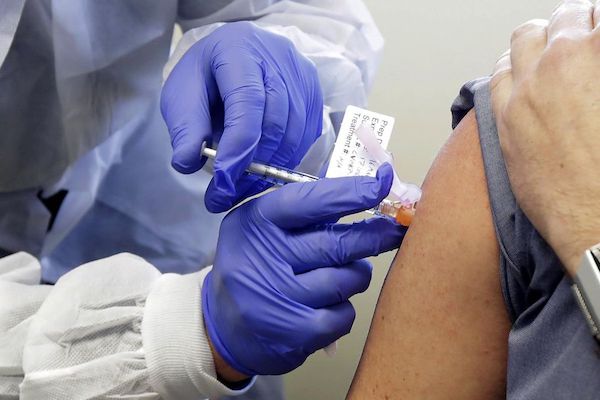
CANIMMUNIZE MAKES WAVES IN NOVA SCOTIA
A made-in-Ottawa vaccine booking system is winning praise in Nova Scotia, where it is being used for the COVID-19 vaccine rollout, and drawing unfavourable comparisons to Ontario where booking a vaccine has become the source of widespread frustration. The Ottawa company CANImmunize built Nova Scotia’s COVID-19 vaccine booking system. The company grew out of an app created by CHLPE's Dr. Kumanan Wilson, a physician and senior researcher at the Ottawa Hospital Research Institute, alongside engineer and now chief technology officer Cameron Bell. They created it almost a decade ago after a woman at a playground complained about the paper-based system of keeping track of vaccines using yellow cards. She suggested Wilson create an app to help people do so...

OCCUPATIONAL HEALTH AND SAFETY
Professor Katherine Lippel is the Canada Research Chair in Occupational Health and Safety Law, leading research to inform policies and legislation that improve worker health and protection. Here we spotlight a couple of her recent open access publications (in French):
Retour au travail après une lésion professionnelle : étude de cas sur les effets du droit sur l’expérience des justiciables
This article reports on findings from a Quebec study investigating the experiences of precariously employed or mobile workers (a fly-in / fly-out health care worker and two employees of temporary employment agencies) who attempt to return to work after a work injury. It illustrates the unexpected effects of legal regulations and their associated economic incentives on the return-to-work process. And it examines mechanisms by which the regulatory framework that governs workers’ compensation, occupational health and safety, and the right to equality lead to less than satisfactory outcomes in disability prevention.
L’indemnisation des travailleurs précaires en Ontario : résistance des employeurs et droit de parole limité pour les victimes de lésions professionnelles
The policies and practices of workers’ compensation have barely kept pace with the changing worker and employer needs created by the growth of precarious forms of employment. This study focused on how well workers’ compensation and return to work policies in Ontario fit the needs of precariously employed workers. Three domains where return to work policies fit uneasily with the precariously employed workers were identified, including knowledge and power contrasts between well informed employers and vulnerable workers, injury attribution challenges, and worker fear of speaking out about accidents.
VACCINE CERTIFICATES SHOULD NOT COME AT EXPENSE OF OTHER COVID PRIORITIES
While there’s mounting pressure to create a vaccine certificate system, it risks diverting focus and funds from other work to combat COVID-19. One example is tackling persisting vaccine nationalism, which now constitutes an obstacle to aggressive vaccination to achieve global herd immunity. Another important competing priority is the intensification of research on second-generation vaccines, or even a universal SARS CoV-2 vaccine to account for emergent variants, which are now threatening to torpedo progress on vaccine development. Then there is the focus on tackling the extremely disruptive effects of COVID-19 itself. Professor Chidi Oguamanam writes in Policy Options...

PRIVACY CONCERNS COMPLICATE VACCINE PASSPORTS
Vaccine passports are a form of documentation that prove people have been inoculated against specific diseases. Countries around the world are developing them to allow people who are vaccinated against COVID to be able to bypass certain pandemic restrictions to once again begin travelling or attending places like restaurants, clubs, bars or gyms. The federal government has a number of privacy considerations to make as it looks into developing a COVID vaccine passport system, according to experts. Karen Eltis contributes in this piece in iPolitics.
VACCINE PASSPORTS DONE EQUITABLY
Around the world, governments and other organizations are developing COVID-19 vaccine passports—documentation to allow vaccinated people greater mobility and access to other services. But vaccine passports are controversial: sources of opposition include scientific questions—for example, whether vaccinated people can still transmit the virus—and concerns about privacy, especially in connection with digital passports. Each of these are likely to be solvable problems. Evidence of vaccine effectiveness continues to accumulate, and privacy concerns could be mostly addressed by adopting passport alternatives that satisfactorily protect an individual’s information.
A deeper and more intractable concern is that any system of vaccine passports risks being discriminatory and inequitable. Consider the inequities we see already in the distribution of COVID-19 vaccines: supplies and distribution have predictably favored richer countries. Marginalized groups are less likely to be vaccinated—often because of worse access, but also because of vaccine hesitancy based on intelligible mistrust of government and historical experiences of medical abuse. For people who are unable to be vaccinated because of their health status or religion, a vaccine passport regime could unfairly frustrate their return to normal life...
Read the full text of the article by Ryan Tanner & Colleen M. Flood in JAMA >
Also check out other recent articles by Professor Colleen Flood and Dr. Kumanan Wilson's team on immunity passports:
Mandatory vaccination for health care workers: an analysis of law and policy

CALL TO ACTION FOR BETTER PLANNING AND BETTER CARE THROUGH BETTER DATA
Safe, high-quality care for patients is tied to safe, high-quality work for health workers. Although COVID-19 has heightened our concerns, many health workforce planning issues predate the pandemic. Without essential health workforce data, we will continue to make decisions in the dark, with incomplete, misleading and non-standardized information that is disconnected from the real-world experience of those at the point of care. The result is inadequate planning for population needs, inefficient deployment of health workers, persistent maldistribution of services, and a perpetuation of current inequities.
Join the call on the Government of Canada to support health workers by making significant and immediate investments to enhance the data infrastructure that provinces, territories, regions and training programs need to better plan for and support the health workforce.

WHAT’S PREVENTING CANADA FROM CREATING A ROBUST HEALTH DATA INFRASTRUCTURE?
High-quality scientific evidence, and the data and analysis on which it is based, is essential to inform the immediate needs of COVID-19 policy and effective health policy more generally. In the current emergency pandemic context, it could have saved lives and reduced serious illness. This situation is not new. Canada’s health information has been sub-standard for decades. The pandemic has only served to make the problems more visible. It’s time the federal government provided much stronger leadership so Canada can finally have an effective health data infrastructure. Professor Michael Wolfson writes in Policy Options...
Full text >
See also Professor Wolfson's recent op-ed in the Ottawa Citizen:
Full text >

"IT’S A MINEFIELD": HOW PUBLIC TRUST IN CANADA'S TOP DOCTORS IS UNDERMINED BY POLITICS AMID THE COVID-19 PANDEMIC
From a federal level with Dr. Theresa Tam, to Ontario’s Dr. David Williams and Alberta’s Dr. Deena Hinshaw, Canada's top doctors have been in the spotlight since COVID-19 was declared a pandemic in March 2020. We've seen in the past year how it's been increasingly difficult for chief medical officers of health (CMOHs) to generate public trust in a government's COVID-19 response while maintaining their own professional integrity amid a health crisis. Professor Patrick Fafard (Public and International Affairs) contributes.
CANADA’S LONG ROAD TO A VACCINE INJURY COMPENSATION PROGRAM
Work is underway on a new pan-Canadian no-fault vaccine injury compensation program, but it may be months before the scheme is operational. Dr. Kumanan Wilson appears in CMAJ News.

UNEXPECTED LESSONS FROM COVID-19: A U.K. DOCTOR'S PERSPECTIVE
Heidi Paine was a resident physician in one of the hardest hit hospitals in London, England during the early days of the COVID pandemic. She is currently a visiting researcher at CHLPE, where she brings her experiences to bear in thinking about the many facets of COVID's impact on the healthcare system. Read her blog post here...
CANADA'S HEALTH WORKFORCE DIGITAL RESEARCH INFRASTRUCTURE
Health workers are the foundation of all health systems. They account for more than 10% of all employed Canadians and over 2/3 of all health care spending, not including the personal and public cost to their training. That amounts to $175 billion in 2019, or nearly 8% of Canada’s GDP. Nonetheless, health workforce research secures less than 3% of health services and policy research funds, and investments in necessary data infrastructure from governments have not materialized. Canada lags behind comparable OECD countries including the U.K., Australia and the U.S. in terms of health workforce data and digital analytics. The gaps in our knowledge about the health workforce have especially been exposed during the COVID-19 pandemic. The consequences of poor health workforce data and science range from sub-optimal health workforce utilization to poor population health outcomes...
Professor Ivy Bourgeault writes in this white paper submitted to the New Digital Research Infrastructure Organization.
Full text >
See also a related op-ed by Professor Bourgeault in the Hill Times.
Full text >
Sign up for event notification and newsletter emails
Find us on...



