Karen Eltis
Civil Law
Karen Eltis specializes on the impact of new technologies and artificial intelligence on democratic governance, cybersecurity, privacy, and access to justice from a comparative perspective.
Key links
- The use of new technologies in the management of dementia patients
The Law and Ethics of Dementia. 2014 - Courts in the digital age: ‘Adaptive leadership’ for harnessing technology and enhancing access to justice
Digital Privacy and the Charter. 2021 - Revisiting the limits on judicial expression in the digital age: Striving towards proportionally in the cyberintimidation context
National Journal of Constitutional Law. 2017 - La surveillance des personnes atteintes de démence par les appareils équipés de la technologie GPS et l'utilisation des « mesures les moins contraignantes »: Une interrogation sur le plan juridique et éthique (Monitoring of persons with dementia by device)
Ottawa Law Review. 2016 - Genetic determinism and discrimination: A call to re-orient prevailing human rights discourse to better comport with the public implications of individual genetic testing
Journal of Law, Medicine & Ethics. 2016


Colleen Flood
Dean of Law, Queen's University / Inaugural Director, CHLPE
CHLPE's inaugural Director from 2015–2023, Colleen M. Flood is recognized as one of Canada’s leading scholars in the area of health law and policy, and is an accomplished leader, author, and commentator. She has made a significant impact on the policies and areas of research informing health services and care delivery sectors and public health, both in Canada and around the world. Her comparative research has been incorporated into national and global debates over privatization, health system design, accountability, and governance, pandemic preparedness and response and the role of courts in defending rights in health care. Her latest work focuses on the governance of health-related artificial intelligence.
Key links

Jason Millar
Electrical Engineering and Computer Science
Jason Millar is an Associate Professor in the School of Engineering Design and Teaching Innovation at the University of Ottawa, with a cross-appointment in the Department of Philosophy. He holds the Canada Research Chair in the Ethical Engineering of Robotics and Artificial Intelligence (AI) and is Director of the Canadian Robotics and Artificial Intelligence Ethical Design Lab (CRAiEDL.ca). He researches the ethical engineering of robotics and artificial intelligence (AI), with a focus on empowering engineers to integrate ethical thinking into their daily engineering workflow. Jason’s work focuses primarily on the ethics, policy and the ethical engineering of automated vehicles, artificial intelligence, healthcare robotics, social and military robotics. Jason has a degree in engineering physics, and worked for several years as an engineer before turning his full-time attention to issues in philosophy and applied ethics.
Key links

Sophie Nunnelley
Common Law
Sophie Nunnelley’s scholarship especially takes up issues of health and mental health law, legal capacity and decision-making, human rights, and the regulation of health artificial intelligence. As a 2023-2024 AMS Fellow in Compassion and Artificial Intelligence, she is investigating the implications of mental health AI for rights such as informed consent and non-discrimination. She is also part of a CIHR-funded research project, Machine MD: How Should we Regulate AI in Healthcare, conducting research and convening cross-disciplinary case studies on specific health-AI technologies and their regulatory requirements. Sophie received her SJD from the University of Toronto where her work was supported by numerous awards, including a Vanier Canada Scholarship, a CIHR Fellowship in Health Law, Ethics and Policy, and a Lupina Fellowship in Comparative Health & Society. She received her LL.M. from Yale University as a Fulbright Scholar. Nunnelley also practiced law with the Constitutional Law Branch of the Ontario Ministry of the Attorney General under the McGuinty government, where she argued cases before every level of court in Ontario, and the Supreme Court of Canada. She was also counsel for a major public inquiry (the “Gomery Inquiry”), a litigator at Blake, Cassels & Graydon LLP, and a law clerk for the Hon. Mr. Justice Gonthier at the Supreme Court of Canada.
Key links
- Holds a 2023-2024 AMS Fellowship in Compassion and Artificial Intelligence for the project Artificial Intelligence and Human Rights Respecting Mental Healthcare: What Role for Law?
- Lead author of reports Machine MD: Law and Ethics of Health-Related AI – Case study 4. Cardiac arrest prediction and Case study 5. The intelligent powered wheelchair
- Personal support networks in practice and theory: Assessing the implication for supported decision-making law
Law Commission of Ontario. 2016 - Counsel for the Ministry of the Attorney General before the Supreme Court of Canada in Ontario v. Criminal Lawyers' Association, 2010 SCC 23

Chidi Oguamanam
Common Law
Professor Oguamanam has diverse interdisciplinary research interests in the areas of global knowledge governance in general, especially as manifested in the dynamics of intellectual property and technology law with emphasis on biodiversity, biotechnology, including agricultural biotechnology. He identifies the policy and practical contexts for the exploration of the intersections of knowledge systems, particularly western science and the traditional knowledge of indigenous and local communities within the broader development discourse and paradigm. He is interested in the global institutional and regime dynamics for negotiating access and distributional challenges regarding the optimization of benefits of innovation by stakeholders. He has written and published several articles on international intellectual property law-making, biotechnology in the context of health and agriculture, indigenous peoples, indigenous knowledge, farmers’ rights, access and benefit sharing over genetic resources, environmental law and biodiversity conservation, the policy and legal intersections of traditional and hi-tech agricultural practices, documentation and digitization of local knowledge systems, globalization, complementary and alternative medicine (CAM), medical ethics, nutrition, public health law and policy, colonialism and the legal profession.
Key links

Teresa Scassa
Common Law
Dr. Teresa Scassa is the Canada Research Chair in Information Law and Policy at the University of Ottawa, Faculty of Law. She is the author or co-author of several books, including Canadian Trademark Law (2d edition, LexisNexis 2015), and Electronic Commerce and Internet Law in Canada (CCH Canadian Ltd. 2012) (winner of the 2013 Walter Owen Book Prize). She is a past member of the External Advisory Committee of the Office of the Privacy Commissioner of Canada, and of the Canadian Government Advisory Committee on Open Government. She is a member of the GEOTHINK research partnership, and has written widely in the areas of intellectual property law, law and technology, and privacy.
Key links

Devin Singh
Medicine (Affiliate Researcher)
Dr. Singh is one of Canada's first physicians to specialize in clinical artificial intelligence. He is an emergency physician at The Hospital for Sick Children (SickKids) in Toronto and holds a Masters in Computer Science degree from the University of Toronto. He is an Assistant Professor at the University of Toronto in both the Temerty Faculty of Medicine and the Division of Computer Science and is an emerging scholar helping to innovate the regulatory, privacy, and ethical landscape for AI in Canada and beyond.
Key links

Christopher Sun
Telfer School of Management
Christopher Sun is an Assistant Professor the University of Ottawa Telfer School of Management and a Scientist at the University of Ottawa Heart Institute. His research interests lie at the intersection of optimization, artificial intelligence, public health, and health equity. His research primarily revolves around utilizing data-driven optimization, machine learning, and simulation techniques to inform the design of healthcare systems and development of public health policies. He has conducted his research in collaboration with multiple health institutes including Massachusetts General Hospital (Boston, USA), Boston Emergency Medical Services (Boston, USA), Israel National Emergency Medical Services (Magen David Adom; Israel), St. Michael’s Hospital (Toronto, Canada), and Gentofte Hospital (Copenhagen, Denmark). He received his BASc in Engineering Science (Biomedical Engineering) and PhD in Industrial Engineering from the University of Toronto. He was also a Postdoctoral Fellow and Visiting Assistant Professor at the Massachusetts Institute of Technology’s Sloan School of Management.
Key links
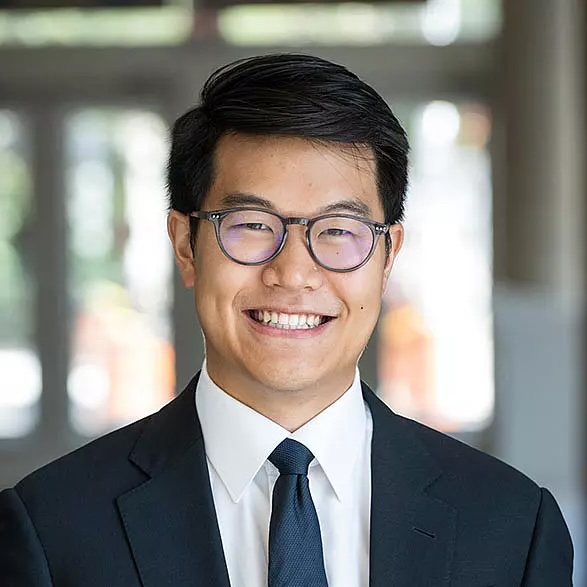
Kumanan Wilson
Medicine
Dr. Kumanan Wilson is a specialist in General Internal Medicine at The Ottawa Hospital; Chief Executive Officer/Chief Scientific Officer, Bruyère Research Institute; Vice President Research & Academic, Bruyère Continuing Care; Chief Scientific Officer, CANImmunize Inc.; and Faculty of Medicine Clinical Research Chair in Digital Health Innovation, University of Ottawa. He is the co-founder of CANImmunize Inc., a science-based technology company spun out from The Ottawa Hospital in 2019. To help Canadians keep track of their vaccinations, the team developed CANImmunize, a pan-Canadian digital immunization tracking system available as a mobile app and through a web portal. Dr. Wilson’s research focuses on digital health, immunization, pandemic preparedness and public health policy and innovation. His research on immunization has explored social media’s impact on vaccine hesitancy, evaluation of vaccine safety using health services data and vaccine policy, including advocating for vaccine injury compensation. Other research interests include blood safety and newborn screening, health ethics, law and policy.
Key links
- The Independence of National Focal Points Under the International Health Regulations
(2005) Harvard International Law Journal. 2005 - Canada's legal preparedness against the COVID-19 Pandemic: A scoping review of federal laws and regulations
Can Public Adm. 2021 - Preparing for the next pandemic by creating Canadian Immunization Services
CMAJ. 2021 - National focal points and implementation of the International Health Regulations
Bull World Health Organ. 2021 - Mandatory childhood immunization programs: Is there still a role for religious and conscience belief exemptions
Alberta Law Review. 2021
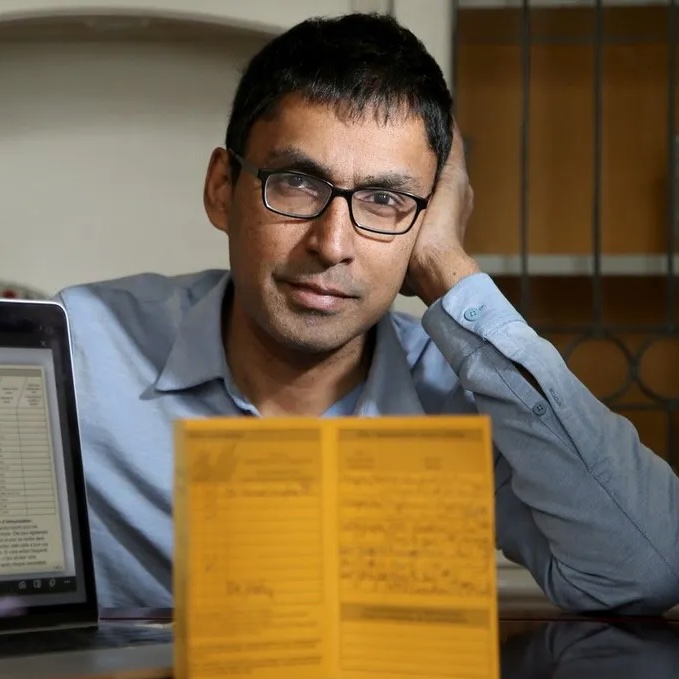
Marco Zenone
Health Sciences
Marco Zenone is an assistant professor of health science communication at the Faculty of Health Sciences, University of Ottawa. He completed his Ph.D. in public health and policy at the London School of Hygiene and Tropical Medicine, University of London. He then completed his postdoctoral training as a Banting Postdoctoral Fellow at the School of Public Policy and Global Affairs, University of British Columbia.
Marco's research group studies the spread, impact, and political economy of health misinformation and disinformation, examining how patients and the public are misled about treatments, disease causes, and health risks, and how health topics are portrayed across digital platforms. It focuses on the commercial determinants of health, including how profit-driven systems and platform structures amplify misleading or harmful content. It emphasizes moving away from blaming individuals and toward creating accountable systems that prevent, mitigate, and respond to disinformation.
Key links
- The Political Economy of Wellness: Commercial Determinants of a Burgeoning Industry
- Generative artificial intelligence-driven chatbots and medical misinformation: an accuracy, referencing and readability audit
- The Politics and Profit of Disinformation in Public Health
- The marketing of “stem cell” supplements on Amazon.com: Assessing alignment with regulatory frameworks in the United States and Canada
- Glucagon-Like Peptide-1 Receptor Agonists and Pay-Per-Click Direct-to-Consumer Advertising